
An election is a large and complex event. It takes several years to plan and prepare for each general election.
The 3-year cycle
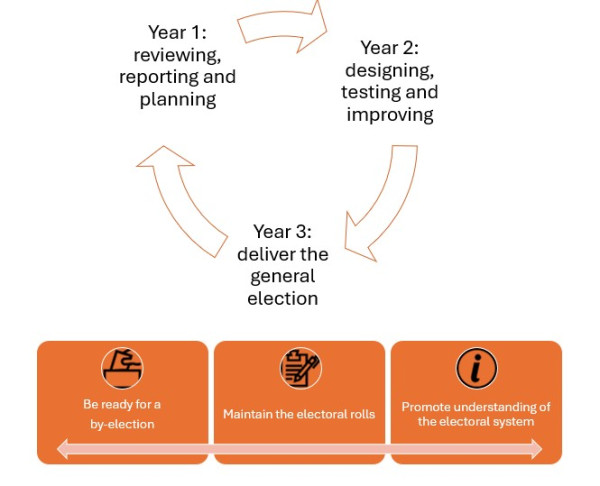
Year 1
No election is the same, and for each election we look at what we can do better.
In the year following a general election, we review the delivery of that election. We consider feedback from voters, candidates, parties and others about their experiences.
We prepare a report on the election for Parliament, including proposals for law changes to help improve how elections are run.
We decide what our priorities are and begin planning the design and implementation of the next election.
Planning goes beyond the 3-year cycle. We also identify longer-term initiatives we can start work on to improve future elections.
Year 2
Year 2 is the middle year of the election cycle. Our focus is on designing, testing, and improving systems for the next general election.
We make sure we have ordered enough supplies, for example enough paper for printing voting papers. We identify the suppliers and organisations we will work with to deliver the election.
We plan for how we will recruit the more than 20,000 people who will work on the election. We start recruiting regional and electorate managers and find properties to use as headquarters throughout the country.
During year 2 we also redesign our services as needed to give effect to any changes to electoral laws.
Year 3
In the third year of the cycle, we put in place the infrastructure and systems needed to conduct the election.
The Prime Minister sets the date, and we must be ready to deliver an election on whatever that date may be.
Extensive recruitment and training of a temporary workforce takes place, and voting places are found and set up, ready for voting in the general election.
We send information to voters about enrolment and voting and run public information and education programmes.
We hold the election and release the results.
Other work
We have a wide programme of other work, as well as preparing for and holding general elections.
We are always on stand-by to run a by-election if an electorate seat becomes vacant between general elections.
One of our legislative requirements is keeping the electoral rolls up to date, which includes an enrolment drive ahead of general elections and the local body elections. We ask people to check they are enrolled and their details on the electoral roll are correct. We provide information on the choice for Māori between the Māori and general rolls, known as the Māori Electoral Option.
We provide information and education to communities, schools, and others to promote participation and understanding of New Zealand’s electoral system.
What is New Zealand’s system of government?
We administer the Electoral Act 1993 and provide advice to parties and candidates about compliance with the law.
Political parties in New Zealand
We also support the work of the Representation Commission when it reviews electorate boundaries. The last boundary review was held in 2025 and the new electorates will be in place for the 2026 General Election.
How are electorate boundaries decided?
Reports to Parliament
You can find out more about our workplans and progress through our reports to Parliament, including our annual reports. The reports are published on this website.